
Coon Rapids, MN · Garage Door Service
Detached and Attached Garages Don't Age the Same Way Here
How Coon Rapids' 1957-2007 housing stock and cold winters change what matters on detached vs attached garage doors, and what to check on each.
- Repairs & new doors
- Springs & openers
- Serving 7 nearby communities
What Is Going On
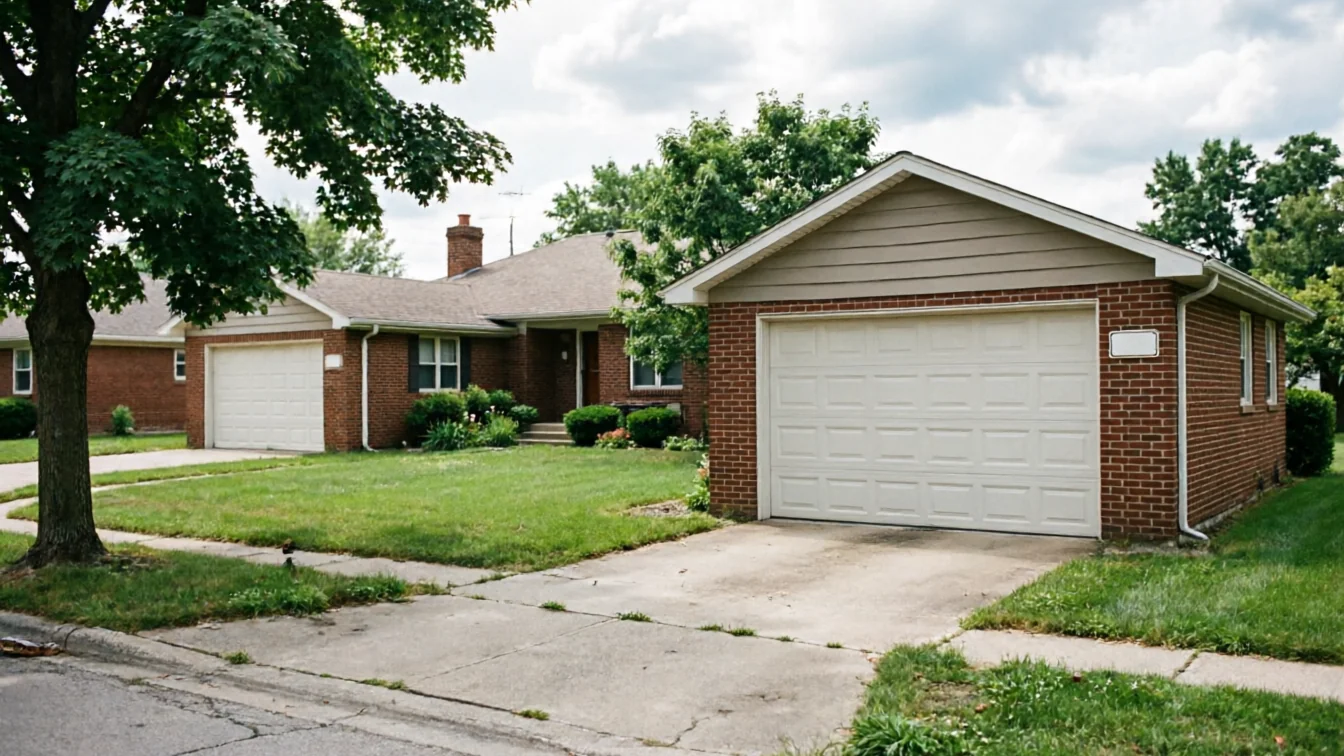
Coon Rapids has a mix of both setups, and the split usually comes down to when the house went up. A lot of the housing stock here dates from 1957 through the early 2000s, with the bulk built in the 1980s and 90s, and that era is when attached garages became the default. Older sections of town still have detached garages set back from the house, often with their own separate service panel and sometimes a smaller single door instead of a double. The two setups don't fail the same way. An attached garage shares a wall and often a header with the living space, so a sagging door or a worn opener can transmit noise and vibration right into the house. A detached garage doesn't have that problem, but it also doesn't get any residual heat from the house, which matters a lot once winter sets in. We see the difference most in how hardware holds up over time - a torsion spring on a detached, unheated garage works through a bigger temperature swing every single day than one on an attached garage next to a heated wall.
What to Look At First
On an attached garage, start at the wall it shares with the house. Look for daylight around the door frame, check whether the weatherstripping at the bottom still makes full contact, and listen for a door that bangs or rattles the shared studs when it opens - that's often a balance problem, not just noise. On a detached garage, start with the slab and the header instead, since there's no adjoining wall to lean on for support and age shows up structurally first. Check the bottom panel for rust or rot where it meets the slab, since a detached structure typically sits at grade without the same foundation tie-in as an attached garage built into the house's footing. On either setup, pull the manual release and move the door by hand - if it's hard to lift past halfway, the spring is losing tension, and that's true regardless of which type you have. The honest limit here: we can tell you what to look at, but spring tension and rust depth are things you want checked in person, not diagnosed from a description over the phone.
How Local Conditions Play In
Coon Rapids sits in a cold, severe climate band, and that hits detached and attached garages differently. A detached garage has no shared wall to buffer it, so the steel in the door, the springs, and the track all sit at outdoor temperature most of the winter. Lubricant thickens, steel contracts, and a spring that was fine in October can bind or snap in January. An attached garage gets some benefit from the house's heat bleeding through the shared wall, which keeps the hardware a little warmer and the lubricant a little looser, but it's not immune - if the garage itself is unheated and unfinished, which is common in the older stock here, the gap closes fast once the temperature drops. Either way, cold is the variable that does the damage, and houses built in the 1980s and 90s around here were built to the code and insulation standards of that era, not today's, so an attached garage from that period may be less buffered than a newer one in another part of the metro.
When Waiting Is Fine
Not every noise or stiff spot needs a same-week call. If a detached garage door is just a little slower to lift on the coldest mornings but moves fine once it warms up, that's the cold doing what cold does to steel and lubricant - not a failure. If an attached door rattles slightly but the balance test (lifting it by hand) still feels even, you can usually wait for a scheduled check rather than an emergency one. Where we'd say don't wait: a detached garage door that's visibly rusted through at the bottom panel, or an attached door that's pulling away from the track where it meets the shared wall. Those get worse, not better, with another freeze-thaw cycle.
Frequently asked questions
Does a detached garage door need different hardware than an attached one?
Not necessarily different hardware, but detached garages in this climate put more stress on springs and tracks since there's no adjoining heated wall to buffer temperature swings. The door itself can be the same style; it's the maintenance interval on springs and lubrication that tends to need more attention on a detached structure.
Why does my attached garage door bang against the house wall?
That's usually an imbalance in spring tension, not a structural problem with the shared wall. When a door is heavier on one side as it travels, it can transmit vibration into the framing it's attached to. Worth checking the balance by hand before assuming it's anything bigger.
Is it worth insulating a detached garage door?
It depends on whether you're conditioning the space at all. If the detached garage stays unheated, an insulated door slows heat loss from whatever warmth does build up, but it won't match the buffering an attached garage gets from the house's shared wall.
Related garage door services in Coon Rapids
More garage door guides
Book garage door service in Coon Rapids
Call now or request a quote - tell us what the door is doing and where you are.