
Coon Rapids, MN · Garage Door Service
Older Doors, Harsh Winters: What Coon Rapids Homeowners Should Know
Coon Rapids homes built between 1957 and 2007 often carry doors older than today's insulation standards. Here's what that means for your garage in a severe cold climate.
- Repairs & new doors
- Springs & openers
- Serving 7 nearby communities
What Is Going On
Coon Rapids housing stock runs from 1957 through 2007, with the median build year sitting at 1982. That means a large share of garages in this town went up before insulation requirements tightened the way they have for newer construction. A single-layer steel door with no foam core was standard issue in that era, and plenty of them are still hanging in their original openings.
The door itself isn't usually what fails first. It's the gap between what the door was built to handle and what a Minnesota winter actually asks of it. A door rated for a mild climate, installed in a home from the early 1980s, is going to perform differently than a door installed last year to current code. Neither is broken. They're just built to different assumptions, and homeowners rarely know which one they have until they feel the difference standing next to it on a January morning.
This isn't about every door needing replacement. It's about knowing what decade your door came from, because that tells you more than the dent in the bottom panel does.
What to Look At First
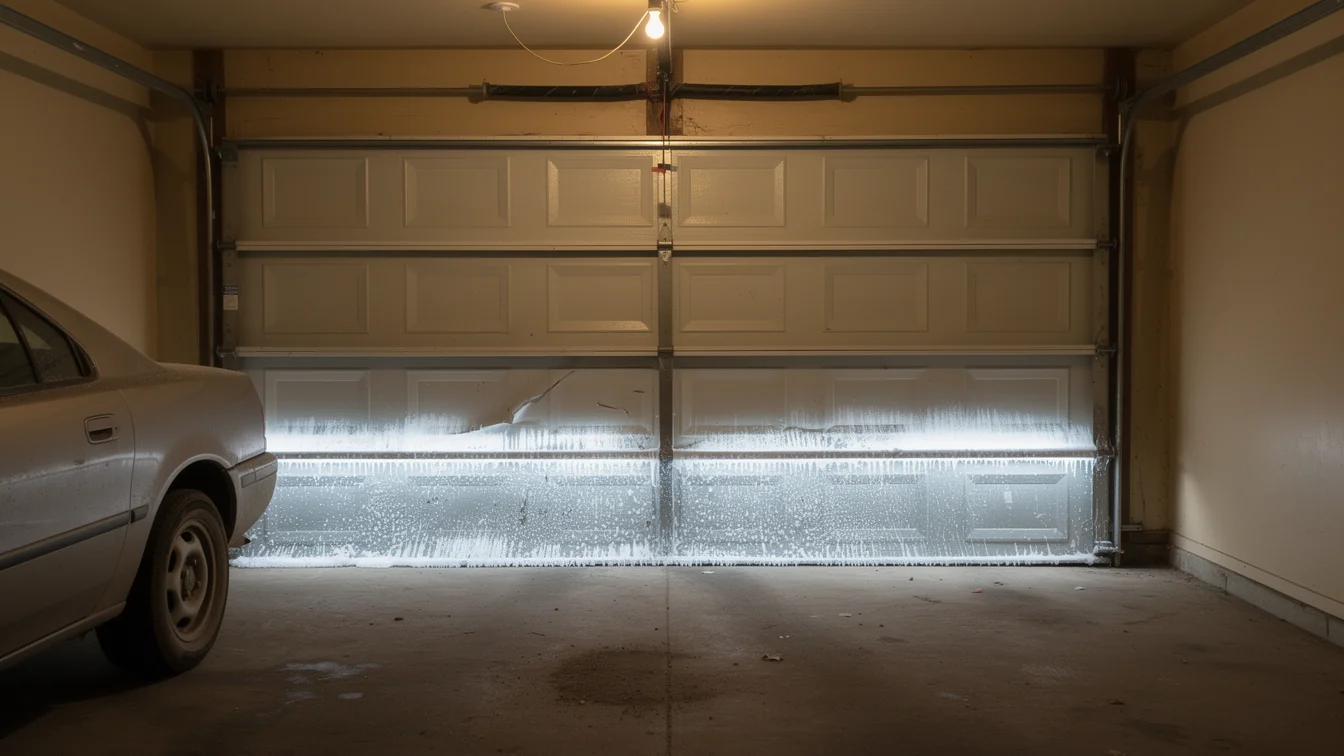
Start with the door's age relative to the house. If your home falls in that 1957-2007 build window and nobody's mentioned replacing the garage door, there's a real chance it's original or close to it. Look at the panel construction: a single thin steel skin with no visible foam backing, or a door that feels cold to the touch from the inside even when the garage is closed, points to a non-insulated or lightly insulated unit.
Check the bottom seal and the weatherstripping along the sides. On doors from the 1980s and 90s, the rubber has usually hardened and cracked by now, and that's often a cheaper fix than people assume, separate from the insulation question. Also look at the track and hardware. A lot of 1980s-era service area homes still run the original rollers and hinges, and those wear differently than the door skin does.
The honest limitation here: we can't tell you your door's R-value, or lack of one, without looking at it in person. Age and feel are good indicators, not a substitute for someone checking the panel construction directly.
How Local Conditions Play In
This town sits in a severe cold climate band, which changes what an uninsulated or under-insulated door actually costs you, beyond comfort. In a mild climate, a thin steel door with gaps at the bottom is an inconvenience. Here, it's a direct line for cold air into an attached garage, and in homes where plumbing or an HVAC unit runs through or near that space, that matters more than it would somewhere warmer.
The age of the housing stock and the climate compound each other. A door built to the standards common when most of this area's housing went up, 1957 through 2007, wasn't necessarily built with this climate's full severity in mind, especially on the older end of that range. Newer doors sold today account for it by default. Older doors on older homes often don't, and nobody retrofitted them because the door still opens and closes fine.
That's the part that's easy to miss: a door can be fully functional, closing and sealing with no visible fault, and still be a weak point for heat loss simply because of when it was built.
When Waiting Is Fine
Not every older door needs to come out this year. If the door opens and closes without strain, the seals aren't torn through, and the garage isn't heated or tied into living space, an uninsulated door from the 1980s or 90s may simply not be worth replacing yet. Insulating or replacing a door that's doing its job, just doing it less efficiently than a new one would, is a cost-benefit call each household should make on its own terms, not something to rush into because of a build year alone.
Where it stops being fine to wait: if the garage is attached, heated, or shares a wall with living space, or if you're already feeling drafts strong enough to notice standing in the garage. At that point the age of the door and the climate band aren't just background facts, they're actively costing you heat and money every winter the door stays as-is.
We're not going to tell you every pre-2000 door in Coon Rapids needs swapping out. Plenty are fine for years yet. The point of knowing your home's build era is making that call with real information instead of guessing.
Frequently asked questions
How do I know if my garage door has any insulation at all?
Touch the inside of the door panel on a cold day. If it's cold to the touch and you can't see or feel a foam backing layer, it's likely a single-layer steel door with no insulation. Doors built for this climate band usually have a visible foam core on the interior face. We can confirm it in person if you're not sure.
Does my house's build year tell me much about my door?
It's a decent starting clue. Coon Rapids homes mostly date from 1957 to 2007, median around 1982, and insulation standards for garage doors have tightened a lot since then. An original door on an older home in that range is more likely to be a non-insulated or lightly insulated unit than a door on a home built in the 2000s.
Is it worth insulating an old door instead of replacing it?
Sometimes, if the door panels and hardware are otherwise sound. Retrofitting insulation into an old steel door is possible but has limits compared to a door built insulated from the start. We'd look at the specific door and the garage's use, attached and heated versus detached, before recommending one over the other.
Related garage door services in Coon Rapids
More garage door guides
Book garage door service in Coon Rapids
Call now or request a quote - tell us what the door is doing and where you are.