
Coon Rapids, MN · Garage Door Service
Garage Door Tune-Ups for Coon Rapids Area Homes
Coon Rapids homes built between 1957 and 2007 need seasonal garage door maintenance before Minnesota's cold winters stress springs, tracks, and openers hard.
- Repairs & new doors
- Springs & openers
- Serving 7 nearby communities
How Long It Takes
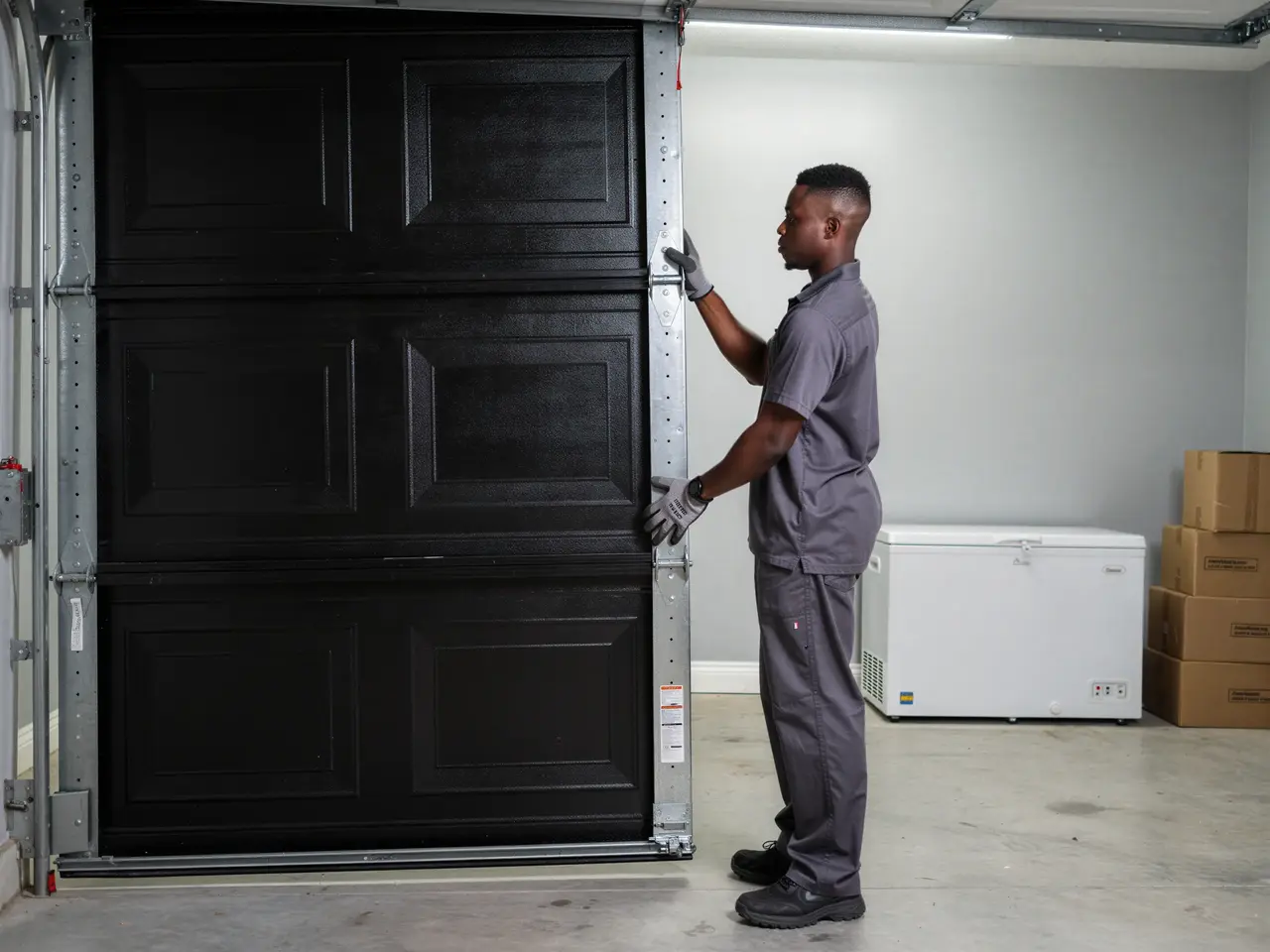
A tune-up isn't a five-minute once-over. We go panel by panel, checking roller wear, track alignment, hinge tightness, and spring tension, then cycle the opener to see how it handles the full travel of the door. On a lot of the houses in this area, that means working with hardware that's thirty to forty years old - original to a house built in the 1982-median stretch of 1957 to 2007 that makes up most of this service area's housing stock. Older hardware takes longer to check properly because nothing about it is standardized the way newer doors are.
We don't rush a spring inspection to hit a quota. If a torsion spring looks fatigued or a cable shows fraying, that gets flagged and discussed before we move on, not buried in a checklist. Some visits are quick because the door's in good shape. Others run longer because we're tracking down why a roller is binding on a track that's slightly out of plumb. We'd rather take the extra time on-site than have you calling back in six weeks for the same problem.
Why This Fails Locally
This area's housing stock spans five decades, but a large share of it - across the named neighborhoods in this service territory - was built in the 1980s and 90s. That generation of garage doors often came with steel hardware and lubrication specs that weren't designed with a cold-severe climate band in mind over forty-plus years of freeze-thaw cycles. Grease hardens below a certain temperature, torsion springs lose a bit of tension every winter they're not serviced, and tracks that were bolted true in 1986 shift slightly as the slab settles.
None of that is dramatic on its own. It's cumulative. A door that's never been serviced in a climate this cold doesn't fail all at once - it fails one cold snap at a time, as dried lubricant turns rollers into friction points and a spring that's lost ten percent of its tension turns an opener's motor into something working twice as hard to lift the same door. The houses most at risk aren't the newest ones. They're the ones sitting in that long 1957-2007 build window with original or near-original hardware that's never been touched.
The Symptom
The first sign is almost always sound before it's function: a grind on the way up, a shudder partway through the cycle, a pause where the door used to move smooth. In this climate, that symptom shows up hardest on the first genuinely cold mornings of the season, when stiff grease and a slightly weak spring combine to make the opener strain audibly.
Some owners notice the door closing crooked, dropping faster on one side than the other - that's usually uneven spring tension on a door that's had one spring serviced and not the other, or never serviced at all. Others notice the opener's safety reverse triggering for no visible reason, which is often the opener compensating for resistance in the track rather than an actual obstruction. None of these are emergencies on day one. Left alone through a full winter, they tend to become one.
The Cost of This Job
We're not going to quote a number here that doesn't hold across every house in this service area, because the honest answer depends on what we find - a door that's been ignored for a decade costs more to bring current than one that's had regular attention. What we can say is that a scheduled tune-up is reliably cheaper than the emergency call that follows a snapped spring on a Saturday morning in January.
One limitation worth being upfront about: maintenance doesn't reverse a door that's already past its service life. If the panels are rusted through or the track is bent beyond adjustment, a tune-up is money spent delaying a replacement decision, not avoiding one. We'll tell you straight if that's where your door is, rather than servicing it and letting you think it bought more time than it did.
Frequently asked questions
How often should I get my garage door serviced in Coon Rapids?
Once a year is the general target for this climate, ideally before the first hard freeze. Doors on original hardware from the older end of this area's housing stock - anything pushing thirty-plus years - often do better on a tighter interval since the parts have more wear to track.
Can maintenance fix a door that's already making noise?
Sometimes. A noisy door from dry hinges or a slightly loose track often quiets down after a proper service. A noisy door from a damaged spring or a bent track needs the actual part addressed, not just a tune-up - we'll tell you which one you're dealing with.
Does cold weather actually damage garage door parts?
Yes, cumulatively. Grease thickens, metal contracts slightly, and springs lose tension faster when they're cycling in cold air without regular service. It's rarely one bad winter that breaks a door - it's several winters of an unserviced one.
Related services
By Neighborhood
Maintenance across the Coon Rapids area
We also handle maintenance in these Coon Rapids-area suburbs.
Book garage door service in Coon Rapids
Call now or request a quote - tell us what the door is doing and where you are.