
Coon Rapids, MN · Garage Door Service
Deciding Whether to Repair or Replace a Garage Door in Coon Rapids
Coon Rapids homes built mostly between 1957 and 2007 face cold-climate wear on garage doors. Learn which repairs make sense and when replacement is smarter.
- Repairs & new doors
- Springs & openers
- Serving 7 nearby communities
What Is Going On
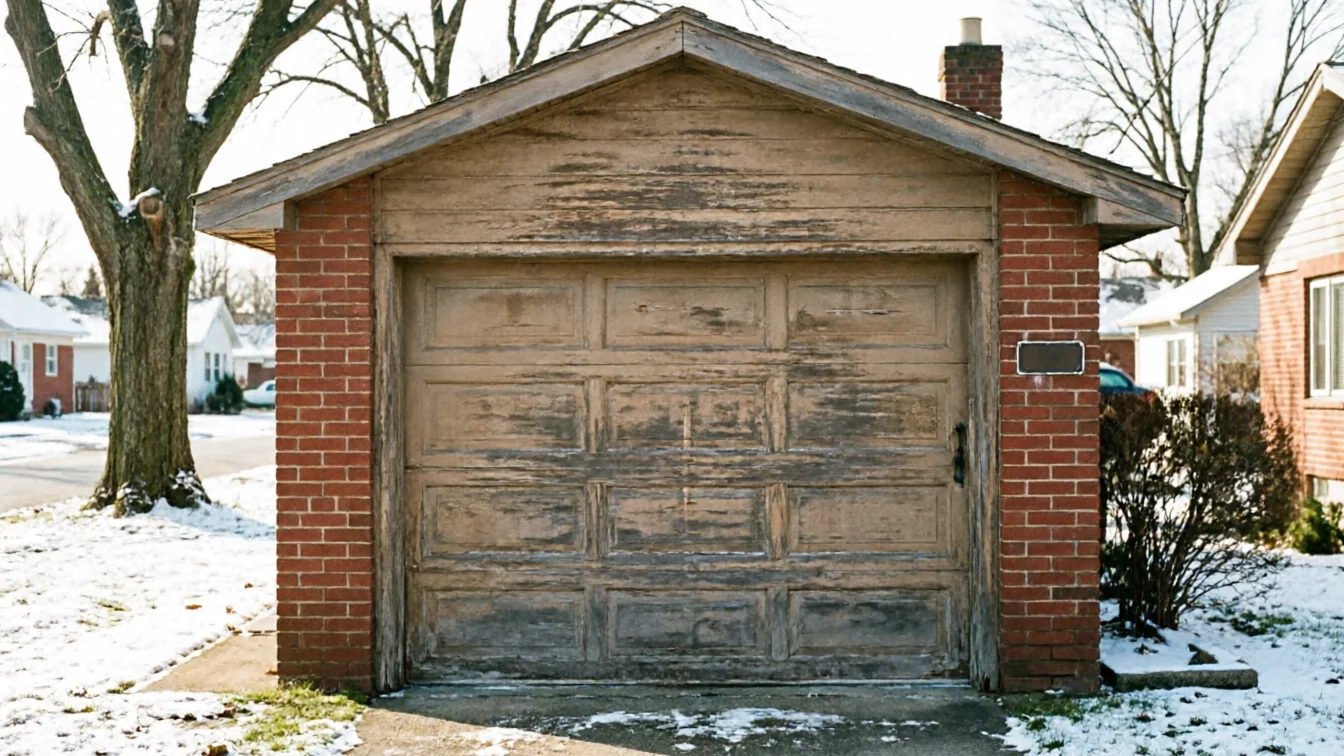
Most houses in this part of the metro went up between 1957 and 2007, with the median build year landing around 1982 and the heaviest stretch of construction happening through the 1980s and 90s. That matters because garage doors don't get swapped out on a schedule the way roofs sometimes do. A lot of doors in Coon Rapids are the originals, or close to it, which puts a big share of the hardware in this town somewhere between 25 and 40 years old.
At that age the question isn't usually "is something wrong" - it's "how much is still right." A torsion spring rated for a certain number of cycles doesn't care how clean the garage looks. Steel panels from that era were thinner and less commonly insulated than what's sold now. None of that means the door is junk. It means the parts have a lifespan, and a house built in 1982 is now asking questions of hardware that was never meant to last forever.
We're not going to tell you every old door needs to go. Plenty of them are fine with a spring swap and new rollers. But knowing roughly how old your door's hardware is - based on when the house itself went up - is the first real piece of information in deciding what to do next.
What to Look At First
Start with the springs, since they're the part most likely to fail without warning and the part most tied to age. If the door is original to a house built in the 1980s or 90s, the torsion spring has almost certainly outlived its rated cycle count even if it hasn't broken yet. Lifting the door by hand with the opener disconnected tells you a lot - if it feels heavy or uneven, the spring is losing tension.
Next, look at the panels themselves, especially the bottom one. Thin steel from that era dents and rusts at the seams faster than current doors, and once a panel is bowed, the track has to work harder to pull it straight every cycle. Check the rollers too. Original nylon rollers on a door this age are usually worn oval instead of round, which is what causes the grinding noise on the way up.
Last, the opener. If it's the original unit, the drive gear and the circuit board are both candidates for failure, and parts for openers from the 80s and 90s are not something we stock - some of them simply aren't available anymore. That's a real limit, not a sales pitch: if your opener model is old enough, repair may not be an option at all, and replacement becomes the only path forward.
How Local Conditions Play In
Coon Rapids sits in a climate band that federal data classifies as cold and severe, and that cold does specific, predictable damage to garage door hardware rather than generic wear. Steel contracts in the cold, which means a torsion spring already near the end of its life is more likely to snap on a sub-zero morning than in July. Grease and lubricant on tracks and hinges thickens up too, which is part of why doors that run fine in summer start grinding or sticking once the temperature drops.
The bottom seal is the other piece. Rubber seals on doors from the 1980s and 90s were a simpler compound than what's used now, and years of hard freezes make that rubber crack and lose its grip on the floor. Once that happens, cold air gets under the door and the opener has to work against a stiffer, heavier panel every time it's pulled off the concrete.
None of this is unique to any one street - it's a function of what this climate does to hardware that's already aging out on its own schedule. A door that would coast along for another five years in a milder climate gets pushed toward failure faster here.
When Waiting Is Fine
Not everything on an older door needs attention right away. A dented bottom panel that still seals and still lets the door run smooth is a cosmetic problem, not a mechanical one - you can live with it as long as you want. Minor surface rust on panel seams, as long as it hasn't eaten through, is the same story. Squeaky hinges that quiet down with a shot of lubricant don't mean the hinge is failing.
The cases where waiting is a bad idea are the ones tied to the spring and the cable. If the spring is visibly stretched, has a gap in a coil, or the door has started dropping unevenly, that's not a wait-and-see item - a spring under tension that lets go can do real damage, including to whoever happens to be near it. Same with a frayed cable.
A fair way to think about it: with a median household income of $112,060 across this area, most homeowners are budgeting a repair or replacement carefully rather than treating it as a casual expense. That's reasonable. Fixing a safety-related failure now and planning a full replacement for later, once you've priced it out, is a defensible way to handle an older door instead of doing everything at once.
Frequently asked questions
How do I know if my garage door is original to the house?
If you haven't had work done on it and don't have paperwork, the best clue is the house's build year itself. Since most homes in Coon Rapids went up between 1957 and 2007 with a median around 1982, a door that's never been serviced is probably close to that age, and the spring is almost certainly past its rated life.
Why does my door act up more in winter?
Coon Rapids sits in a cold-severe climate zone, and cold steel and thickened lubricant make tracks and springs work harder. A spring that's marginal in summer is more likely to fail outright on a sub-zero morning, and rubber bottom seals from older doors crack faster after repeated hard freezes.
Can you still get parts for an opener from the 1980s or 90s?
Not always. Some drive gears and circuit boards from that era are no longer made, which means a repair isn't possible on every unit regardless of what we'd prefer. When that's the case, replacement is the only real option, and we'll tell you plainly rather than chase a part that doesn't exist.
Is it ever fine to just leave a dent or some rust alone?
Yes. A dented panel or surface rust that hasn't eaten through steel is cosmetic, not structural, as long as the door still seals and runs evenly. Save your attention and your budget for spring tension, frayed cables, and anything that affects how safely the door operates.
Related garage door services in Coon Rapids
More garage door guides
Book garage door service in Coon Rapids
Call now or request a quote - tell us what the door is doing and where you are.