
Coon Rapids, MN · Garage Door Service
Garage Door Repair for St. Michael's Newer Housing Stock
St. Michael's garage doors mostly went up in the late 1990s on torsion springs, not the older extension-spring doors common closer to Coon Rapids. Here's what that means for a repair.
- Repairs & new doors
- Springs & openers
- Serving 7 nearby communities
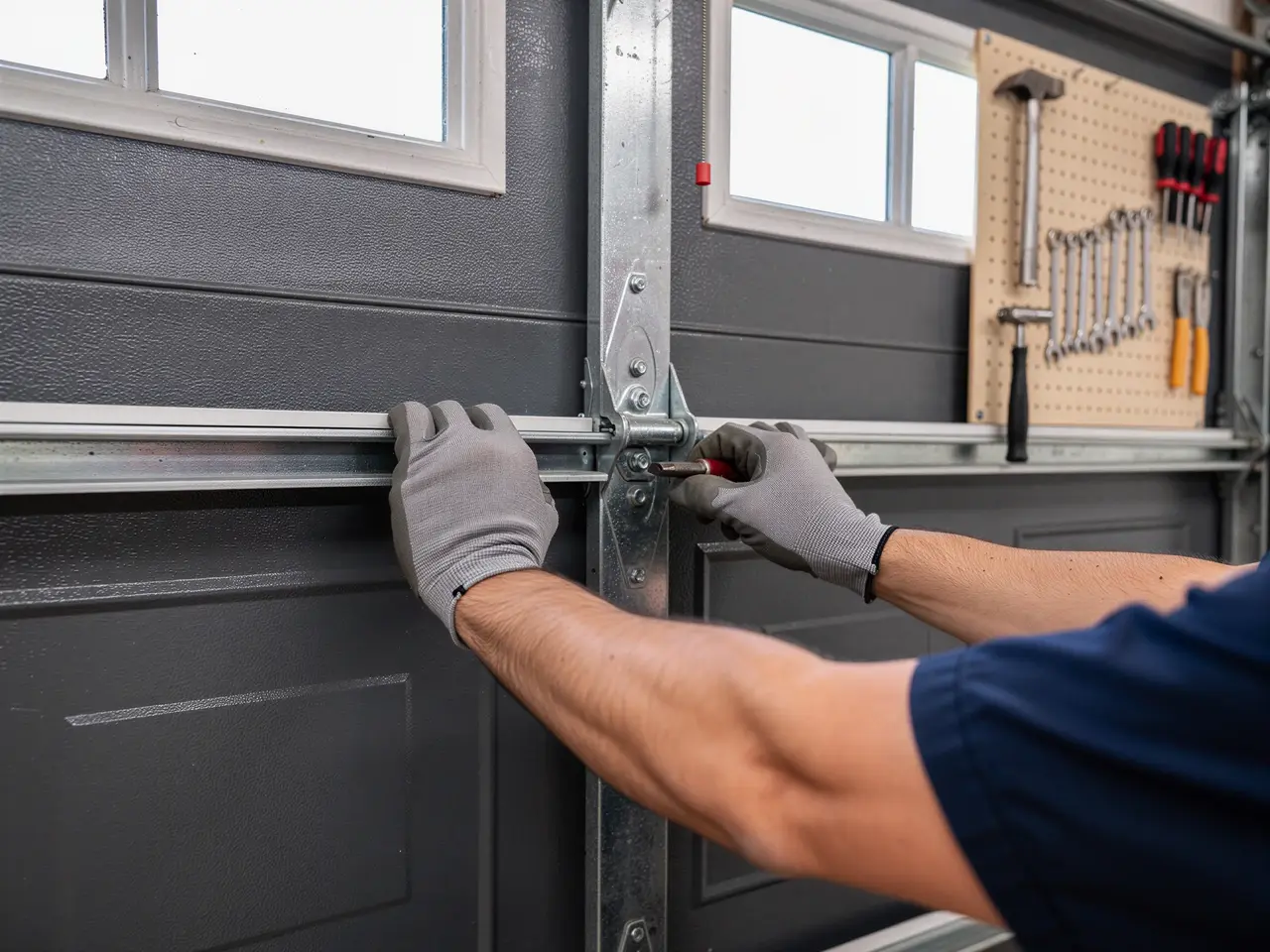
What the Fix Involves
Coon Rapids Garage Door Pros covers garage door repair here out of Coon Rapids, 18 miles east. That distance matters for one reason: it means no local branch and no walk-in counter, just a truck making the drive, so a repair here gets booked, not dropped in on.
What the fix itself involves depends heavily on when the door went up, and St. Michael's housing stock skews later than the rest of the service area. Across the broader territory, homes were built between 1957 and 2007 with a median year of 1982, and most of that stock across the 48 named areas dates to the 1980s and '90s. St. Michael runs later still - median build year 1997 - which means a lot of doors here are steel sectional units on torsion spring systems rather than the older extension-spring doors still common on the Coon Rapids side of the territory.
That difference changes the actual repair. A torsion spring job means winding bars and a stationary cone, not a ladder and an open-coil spring stretched along a horizontal track. Get the two confused and you either can't do the job safely or you order the wrong part.
Why This Fails Locally
A door built in the late '90s is pushing 25-plus years on its original torsion spring by now, and that's about the normal lifespan under regular cycling. The failure doesn't look dramatic - the door gets slower to lift, then one morning it won't budge, or it drops an inch and stops. That's a spring losing tension, not a motor problem, even though the opener usually gets blamed first.
Cold is the other half of it. The service area sits in a severe cold climate band, and torsion springs lose a measurable amount of lifting force once temperatures drop hard in January and February. A spring that was marginal in October can seize or snap outright on the first real cold snap. Nylon rollers on these newer doors also go brittle and crack in that cold faster than the steel rollers on older doors, which is a smaller fix but a common one.
None of this is unique to one house. It's a function of when the neighborhood was built and what the winters do to that generation of hardware, which is why a door failing in St. Michael in February often isn't a coincidence - it's the age of the spring meeting the weather at the same time.
Getting It Booked In
Since the truck is coming from Coon Rapids, 18 miles out, a job here gets scheduled rather than squeezed in same-hour. That's not a promise of a specific window - we don't have a stated response time for this area and won't invent one - but it does mean it's worth calling as soon as the door shows a symptom rather than waiting for it to fail completely, since a spring that's audibly straining or a door that's starting to drop can usually still be scheduled ahead of a full breakdown.
When you call, the two most useful things to have ready are the door's age (or roughly when the house was built, since most doors here date close to that) and whether it's a single wide door or two singles - torsion spring sizing differs between the two, and knowing which one saves a trip back to the truck for the right part.
The Symptom
The most common call from this part of the territory is a door that's gotten heavy - it lifts fine by hand but the opener strains, grinds, or stalls partway up. On a torsion-spring door that's built in the late '90s or early 2000s, that's almost always the spring losing wind, not the motor dying. A second common one is a door that reverses right after it starts closing, which on these systems usually traces back to a sensor knocked out of alignment or a cable starting to fray rather than anything wrong with the spring.
Less common, but it shows up: a door that's fine most days but balks specifically on the coldest mornings, then loosens up by afternoon. That's the cold-weather spring tension issue tied to the severe climate band here, and it's worth mentioning when you call, since it points straight at the spring rather than the opener logic board.
The Complications
The area's median household income runs $130,814, noticeably above the broader service area's $112,060, and that tracks with what we tend to find behind these doors: more belt-drive openers, more Wi-Fi-connected units, fewer of the bare chain-drive openers that are simpler but louder. Belt-drive repairs aren't harder, but the parts and the diagnostic steps differ from a basic chain unit, and a tech who shows up assuming the simpler setup wastes time at the door before the real work starts.
The other complication is scale. With an estimated 6,981 households in St. Michael, this isn't a dense, old inner-ring suburb with a huge stock of identical doors - it's a smaller, newer-built area, so the range of door brands and opener models per house tends to be wider rather than one or two legacy types repeated block after block. That means less guessing from the truck and more confirming on-site before parts get ordered.
One honest limitation: if a torsion spring has already snapped and the cable's come off the drum, that's not a same-visit fix if the replacement spring size isn't a stock one - sometimes it has to be ordered.
Stocked Parts
Across the service area, which covers 249,594 households and 129,062 owner-occupied houses, the truck carries common torsion spring sizes, standard extension springs for the older stock closer to Coon Rapids, rollers, cables, and the sensor and belt parts that fit most residential openers sold in the last two decades. For a door built around St. Michael's 1997 median, that covers the large majority of torsion spring jobs and opener sensor or belt repairs without a special order.
What isn't always on the truck: less common spring wind sizes for wider doors, discontinued opener logic boards, and some older extension-spring hardware that's been phased out by manufacturers. If a job needs one of those, it gets quoted and scheduled as a return trip rather than guessed at and redone. Given the 18-mile run out from Coon Rapids, getting the part right the first time matters more here than it would on a job five minutes from the shop.
Frequently asked questions
Why does my garage door act up specifically in cold weather?
Torsion springs lose measurable lifting force as temperatures drop, and the service area sits in a severe cold climate band. A spring that's already near the end of its life handles summer fine but can seize or snap once a hard cold snap hits, which is why late-winter calls spike even on doors that seemed okay in October.
Is my door torsion spring or extension spring?
If the spring is a thick coil mounted horizontally above the door on a metal shaft, it's torsion. If you see two long stretched springs running along the upper tracks on either side, that's extension. Given St. Michael's 1997 median build year, torsion is the more likely setup here, but it's worth checking before a tech is dispatched.
How fast can someone get out to St. Michael?
The truck comes from Coon Rapids, about 18 miles away, so this is a scheduled visit rather than a same-hour walk-in. We don't have a fixed response window to quote for this area - it depends on the day's route - so calling as soon as the door shows a symptom gives the most scheduling room.
Why does my opener seem different from my neighbor's older house?
Household income here runs higher than the broader service area average ($130,814 versus $112,060, F7), and that correlates with more belt-drive and Wi-Fi-enabled openers on newer builds like most of St. Michael's stock, versus the simpler chain-drive units common on older doors closer to Coon Rapids.
More garage door services in St Michael
Book garage door service in Coon Rapids
Call now or request a quote - tell us what the door is doing and where you are.