
Coon Rapids, MN · Garage Door Service
What We Check First on a Coon Rapids Service Call
A look at what a Coon Rapids Garage Door Pros technician inspects first, based on the age of local housing stock and the cold winters this area gets.
- Repairs & new doors
- Springs & openers
- Serving 7 nearby communities
What Is Going On
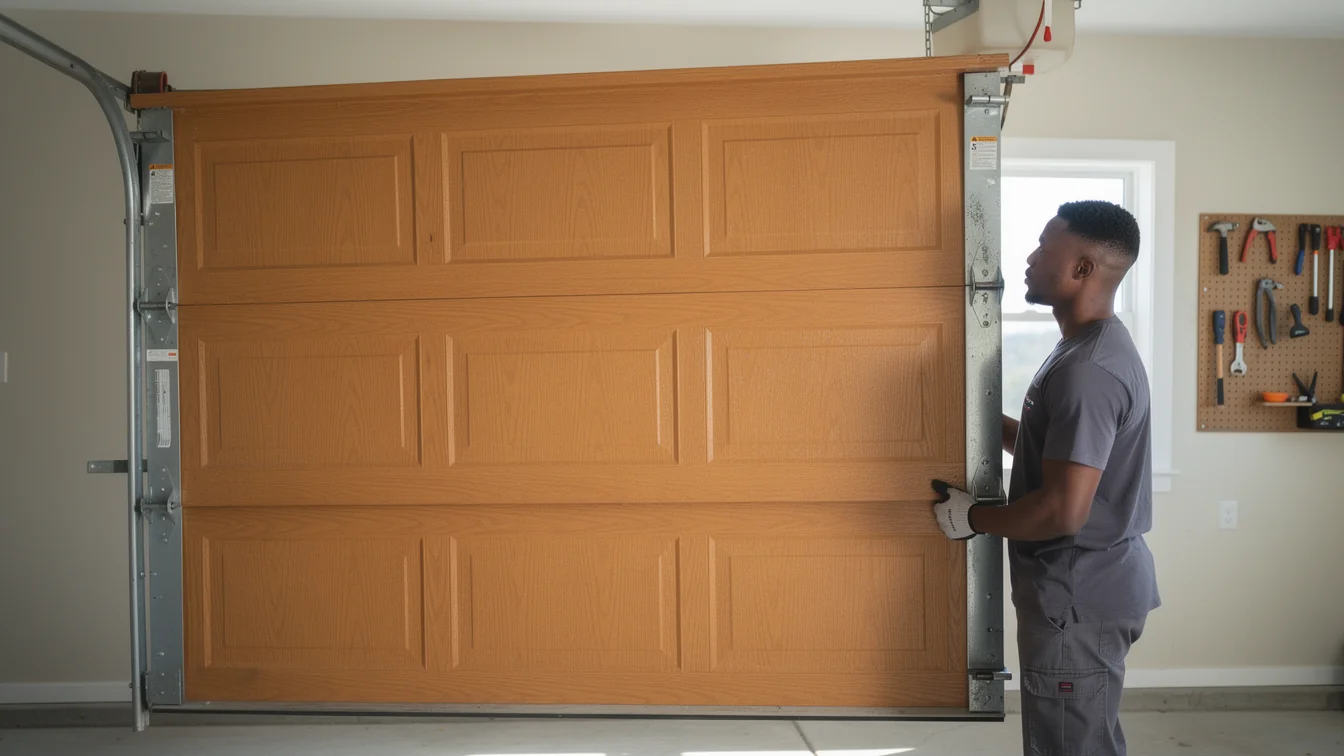
Most calls start the same way: a door that's slow, loud, or stuck halfway. Before we touch a wrench, we want to know what's actually failing versus what's just old. Homes in this service area were built mostly between 1957 and 2007, with the median landing around 1982, and the bulk of that stock dates to the 1980s and 90s across the 48 named areas we work in. That matters because a door installed when the house went up is now 30 to 45 years old if it's original - and almost nothing on an original door is still made to the same spec. Springs sag out of tolerance, tracks shift as slabs settle, and openers from that era weren't built with today's safety reversal systems. So the first question we ask isn't "what's wrong" - it's "how old is this door, and does it match the house." A 1980s door on a 1980s house behaves differently than a replacement door bolted onto 40-year-old track. We check for that mismatch before anything else, because it tells us whether we're looking at a repair or a door that's simply done.
What to Look At First
We start at the spring, not the opener, because a worn torsion spring will fake a dozen other problems - a door that reverses on its own, an opener that strains, a remote that seems to lose range. Next we check the track alignment and the rollers, since houses from the 1982 median build era often have garages on slab foundations that have shifted a little over four decades, enough to throw a track out of plumb without anyone noticing day to day. We also look at the bottom panel and weather seal, because those take the brunt of a Minnesota winter and wear out faster than people expect. Only after springs, track, and seal do we get to the opener itself - the drive gear, the sensors, the wiring. Checking in that order keeps us from replacing an opener board when the real issue is a spring that's two pounds off and making the opener work three times as hard as it should. It also keeps the visit shorter and the invoice honest.
How Local Conditions Play In
This area sits in a cold, severe climate band, and that shapes what fails and when. Steel contracts in deep cold, which tightens tolerances on tracks and rollers that were already borderline from age - so a door that was merely noisy in October can bind completely in January. Springs lose some tension capacity in cold weather too, which is why late-fall and midwinter are when we see the most spring failures, not the dead of summer. We also check weatherstripping and bottom seals for cracking, since repeated freeze-thaw cycles break down rubber faster here than in milder climates. None of this is dramatic - it's slow wear that adds up over a Minnesota winter season after season. A door that's been fine for ten winters can fail on the eleventh simply because the margin finally ran out. That's part of why we look at the whole system each visit instead of just fixing the one symptom someone called about.
When Waiting Is Fine
Not every noise needs a same-day call. If a door is still opening smoothly, closing fully, and reversing correctly when it hits something, a little extra noise or a slightly uneven look often isn't an emergency - it's a sign to get it looked at, not a sign to drop everything. We'll be honest: if your door is from the newer end of the local housing range, built sometime after 2000, a repair almost always makes more sense than a replacement, and we'll tell you that instead of upselling a new unit. On the other hand, if the door is original to a house from the early part of that 1957-2007 build window, we may recommend replacement once we're already out there, because parts for the oldest track hardware are getting hard to source and a patch job won't hold. One honest limitation: we don't carry every obsolete part for pre-1970s hardware on the truck, so a very old track system sometimes means a short wait on parts rather than a same-visit fix.
Frequently asked questions
Why do you check the spring before the opener?
A worn torsion spring causes most of the symptoms people blame on the opener - straining, reversing, slow movement. Checking spring tension first tells us whether the opener is actually broken or just overworked. It also keeps us from replacing good opener parts when the real fix is a spring adjustment or swap.
Does the age of my house matter for garage door problems?
Yes. Most houses in this service area were built between 1957 and 2007, with a lot of that stock from the 1980s and 90s. Original doors and track hardware from that era are decades past their expected service life, and we check for that mismatch before diagnosing anything else.
Why do more doors fail in winter?
Cold temperatures tighten tolerances on steel track and rollers and reduce spring tension capacity. In a cold, severe climate like this one, a door that was just noisy in fall can bind or break in January. We see more spring failures in late fall and midwinter than any other time of year.
Is a noisy door always urgent?
No. If the door still opens, closes fully, and reverses correctly on contact, extra noise is usually a sign to schedule a look, not call for emergency service. We'd rather tell you it can wait a few days than send a truck out for something that isn't urgent.
Related garage door services in Coon Rapids
More garage door guides
Book garage door service in Coon Rapids
Call now or request a quote - tell us what the door is doing and where you are.