
Coon Rapids, MN · Garage Door Service
Garage Door Maintenance for St. Louis Park's 1960s-Era Doors
St. Louis Park's doors date to a 1965 median build year, older than most of the service area. Here's what maintenance actually needs to catch on them.
- Repairs & new doors
- Springs & openers
- Serving 7 nearby communities
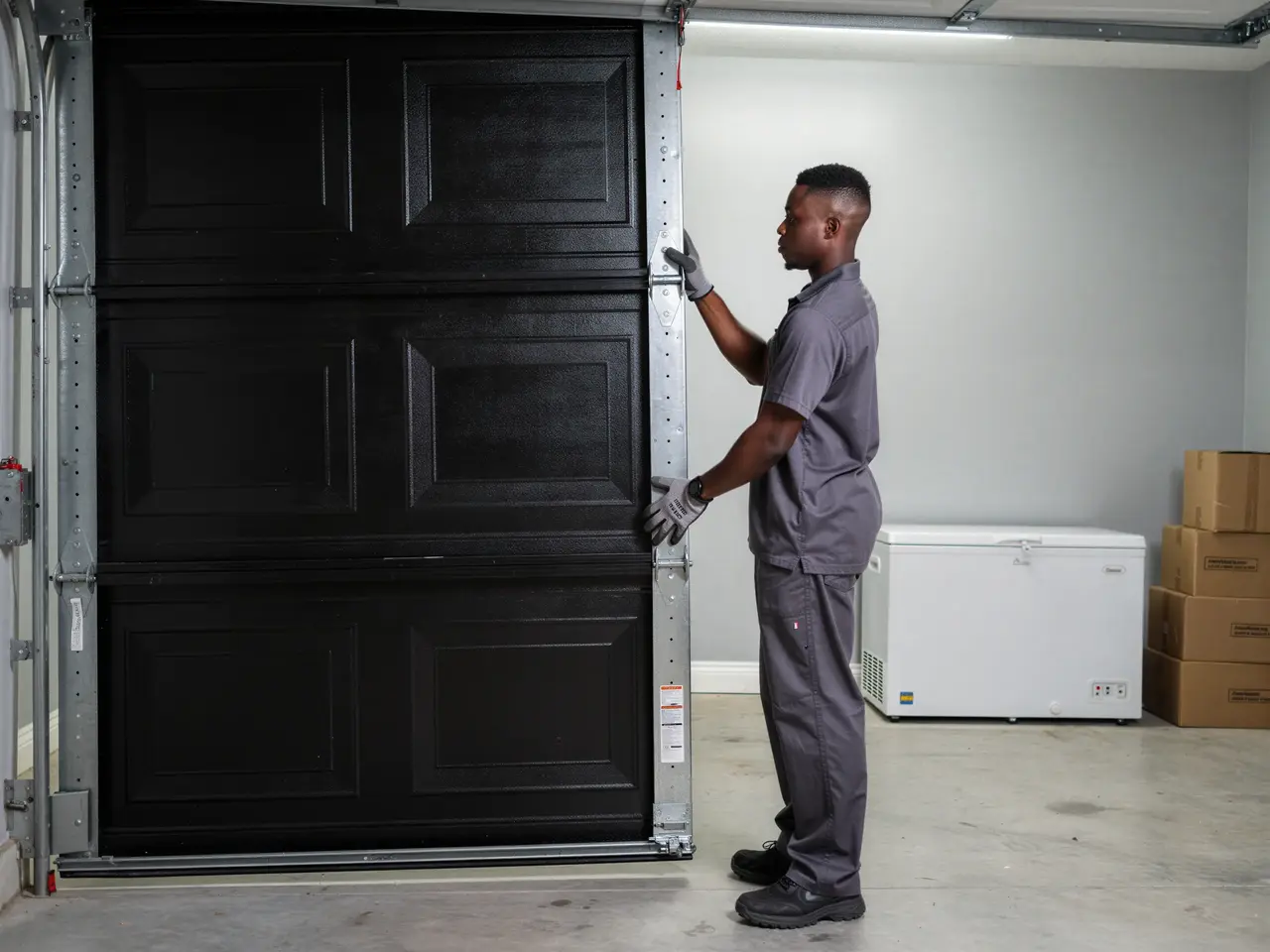
Can You Do This Yourself
Some of this is fair for a homeowner to handle. Wipe down the tracks, vacuum the roller channel, and put a drop of lithium grease on the hinges twice a year. That much is simple and it matters.
What's not simple is anything involving the torsion spring, and in St. Louis Park that's where the real risk sits. The median house here was built around 1965 - a good seventeen years older than the 1982 median across the rest of the territory this company drives from. A door that old is more likely running on a torsion spring that's been wound and re-wound by whoever serviced it last, with no record of the wind count. Guessing at that tension with a cordless drill and a pair of winding bars is how people end up in the ER, not how they end up with a quiet door. Leave the spring, the cable, and anything bolted to the header to someone who does it for a living.
If your opener is original to the house, don't try to diagnose the circuit board yourself either - at that age it's as likely to be a wiring fault as a logic board, and opening the case voids whatever's left of any warranty.
What the Fix Involves
A maintenance visit on a door this age starts with the track, not the opener. Steel track from the 1960s and 70s was mounted with hardware that's rusted at the brackets more often than newer installs, so the first job is checking that every bracket is still tight to the framing and not just held by rust bridging the gap.
From there it's rollers - usually not the original steel ones anymore, but whatever got swapped in at some point - and a check of cable wear where it wraps the drum. On a door with a 1960s build date, the spring has usually been replaced once or twice already, which means the winding cone and the set screws are the parts most likely to be worn past spec even if the spring itself looks fine.
Last is the weatherstrip at the bottom panel and along the jambs. In a cold-winter climate like this one, that seal is doing real work for four or five months a year, and a cracked one lets in enough cold air to stiffen the grease on every moving part behind it, which is its own slow failure.
Stocked Parts
The truck that comes out from Coon Rapids carries the parts that wear out on any door regardless of age: nylon and steel rollers, lift cable, end bearings, hinges, and bottom-panel weatherstrip in the common widths. Those cover the bulk of what fails on a 1965-era door in St. Louis Park.
What doesn't ride on the truck is anything specific to a discontinued opener model or an odd-width track from an original 1960s install that was never standardized. If your door or opener turns out to need a part like that, it gets special-ordered rather than installed on the spot - that's the honest limit of what a maintenance call can finish in one visit.
Lubricant is on the truck too, and it's worth saying plainly: the grease used matters more in a severe-cold climate than people think. A summer-weight grease gums up and slows a door down once temperatures drop, which is a common complaint that has nothing to do with the spring or the opener at all.
The Complications
Age is the main complication, but it's not the only one. St. Louis Park's housing stock, built mostly in the 1960s and 70s, often used narrower garage openings than what's standard in newer construction, which means a replacement roller or section sometimes doesn't fit the original track spacing without an adapter bracket.
The other complication is simply geography. St. Louis Park sits about 16 miles from the Coon Rapids shop, farther out than most of the territory this crew covers day to day. That doesn't change what the job costs or how it's done, but it does mean maintenance visits here get scheduled in blocks rather than slotted in on short notice - worth knowing before you call expecting a same-day fit.
Income in St. Louis Park runs a bit below the wider service area - a median of $100,250 against $112,060 across the territory - which in practice means more homeowners here ask to prioritize the spring and cable work on a maintenance visit and defer cosmetic fixes like a dented panel to a later call. That's a reasonable way to split the budget, and we'll say so if asked.
Getting It Booked In
Maintenance calls for St. Louis Park get scheduled from the Coon Rapids shop, same crew that covers the rest of the territory, just a longer drive. Because of that distance, it helps to book a date rather than ask for the next open slot - grouping St. Louis Park visits together is how the trip stays worth making for both sides.
Tell us the build year if you know it, or at least whether the door or opener has been replaced since the house was built. On a neighborhood where the median home dates to 1965, that one detail changes what we bring on the truck - an original torsion setup needs different attention than a spring that was swapped in ten years ago.
You can see the areas near St. Louis Park this company also covers at /near/st-louis-park/, and the general maintenance service as run out of the home shop is laid out at /garage-door-maintenance-coon-rapids-mn.
Why This Fails Locally
Two things stack against a garage door in St. Louis Park that don't stack the same way everywhere in the territory. First, the age: a median build year of 1965 means a large share of doors are on their second or third spring, second opener, and original track, all aging at different rates and none of it matched to the others anymore.
Second, the climate. This is a severe-cold band, and cold is hard on exactly the parts that are already worn - a torsion spring loses a measurable amount of lift in freezing temperatures, a stiff cable doesn't seat in the drum groove the same way, and dried-out weatherstrip cracks instead of flexing. None of that is unique to this one suburb, but it lands harder here because the underlying hardware is older to start with.
Skipping maintenance on a door like that doesn't usually show up as a slow decline. It shows up as a cable snapping on a Tuesday morning in January, which is a repair call instead of a maintenance one - and a more expensive one.
Frequently asked questions
How old does a garage door have to be before maintenance matters more?
Once a door and its hardware pass about 20 years old, wear accelerates - bearings, cables, and spring cones all age past spec around the same time. With a median build year of 1965, a lot of St. Louis Park houses are well past that mark, which is why a regular maintenance check catches more here than it would on a newer install.
Does cold weather actually affect a garage door spring?
Yes. Metal contracts in the cold, and a torsion spring loses some of its lift as temperatures drop, which is why doors can feel heavier or open unevenly in winter. In a severe-cold climate like this one, that effect is worth checking for every season rather than assuming it's a one-time fluke.
Can you fix a broken spring during a maintenance visit?
No - a snapped spring is a repair, not maintenance, and it needs the door secured and the correct replacement spring on hand, which isn't part of a standard maintenance stop. If a spring is found to be close to failing during a check, we'll say so and get a repair scheduled separately.
Why does scheduling take longer in St. Louis Park than closer towns?
The crew runs out of Coon Rapids, about 16 miles away, which is farther than most of the territory covered day to day. Maintenance visits here tend to get grouped into scheduled blocks rather than fit into same-day openings, so booking ahead works better than calling for immediate service.
More garage door services in St Louis Park
Book garage door service in Coon Rapids
Call now or request a quote - tell us what the door is doing and where you are.