
Coon Rapids, MN · Garage Door Service
New Garage Door Openers for St. Louis Park's 1960s Housing Stock
Opener installation for St. Louis Park's 1960s-built garage doors, sized to original openings, installed by the Coon Rapids crew that drives sixteen miles in.
- Repairs & new doors
- Springs & openers
- Serving 7 nearby communities
Can You Do This Yourself
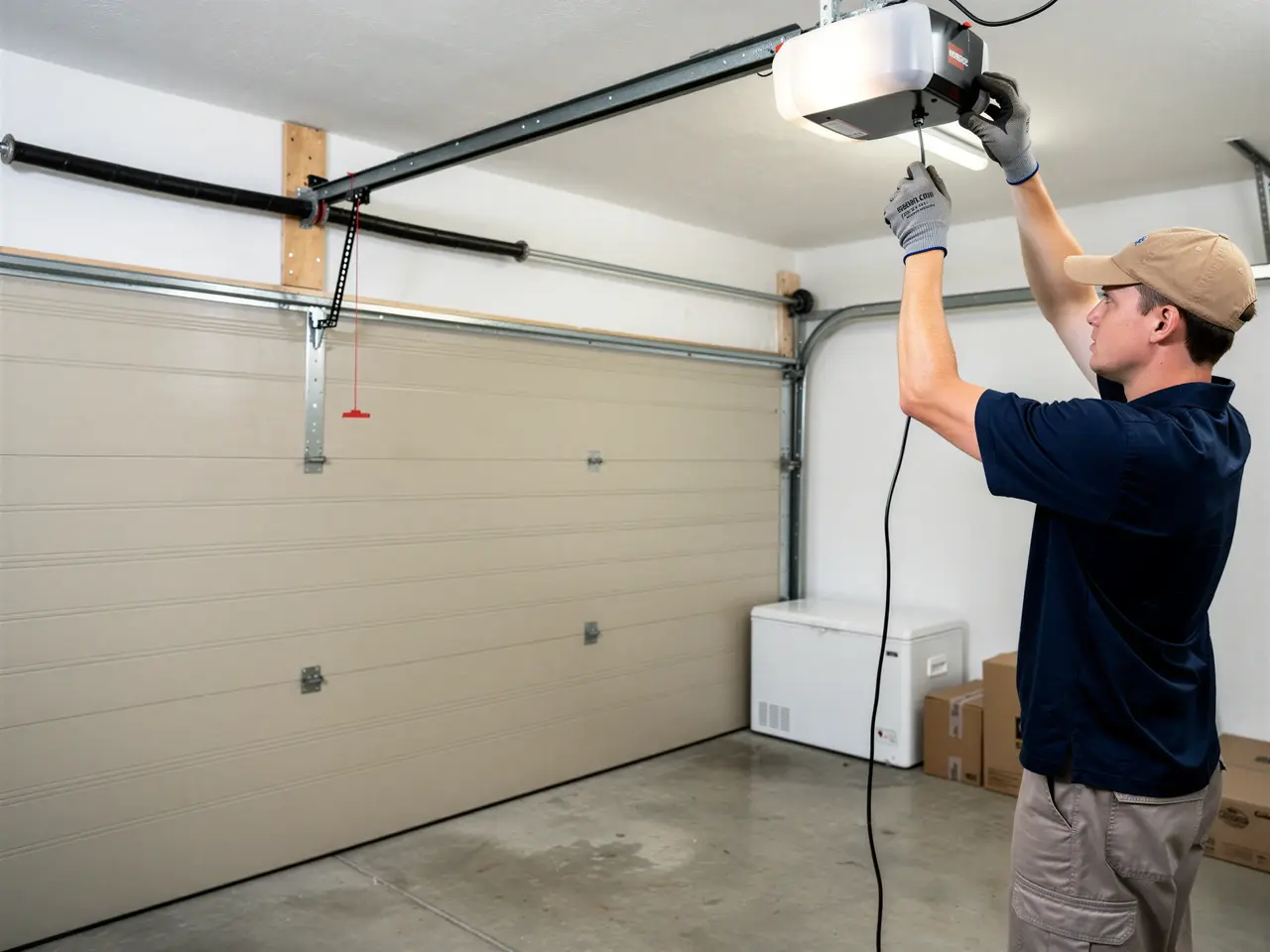
Most garages in this city went up around 1965, which puts them well ahead of the 1982 median build year for the wider area this company covers. That matters because a door from that period is usually a narrower single-car opening or an early double, often still riding on a steel track sized to the original low-headroom framing common in ramblers and split-levels from the era. Swapping the opener on one of these is not the same job as hanging a unit on a newer two-car door. You're working with shorter rail clearance, older header framing, and sometimes a bracket pattern that doesn't match what comes in a current opener box. A homeowner who's comfortable on a ladder and has wired a 120V outlet before can usually manage a straight swap where the rail length and mounting holes line up. Where it gets risky is the header bracket on an undersized 1960s frame - if that bracket isn't solid wood or isn't backed properly, a self-installed opener can pull loose under load. If your header looks original and you're not sure it can take the pull of a 1/2 HP unit, that's the point to stop and call someone, not after the bracket's already torn out.
What the Fix Involves
The work starts with measuring the actual door height and track length rather than assuming a standard kit fits - a lot of 1960s-era doors in this city run a few inches shorter than what current opener rail kits are built for, so the rail sometimes needs trimming or an extension piece. Next is checking the header for a solid mounting point; older framing wasn't always built with an opener bracket in mind, since many of these doors were originally hand-operated. Once the bracket is solid, the rail goes up, the trolley and arm connect to the top door panel, and the safety sensors get mounted low enough to clear whatever's stored along the garage walls. Wiring runs to a dedicated outlet or a hardwired junction, depending on what's already there. Programming the remote and keypad is the fast part. The part that takes the time is making sure the door itself is balanced before the opener ever takes a pull on it - an opener fighting an out-of-balance door from this era will burn out its gears in a year or two, not because the opener's bad but because the door was never carrying its own weight correctly to begin with.
Stocked Parts
Standard 1/2 HP and 3/4 HP chain-drive and belt-drive openers, rail kits in common lengths, safety sensor pairs, and keypads ride on the truck for most jobs. Header brackets and reinforced mounting plates come along too, since older framing in this city's housing stock often needs a backing plate rather than a direct screw-in. What doesn't always come on the truck is a replacement for an obsolete wood-jamb bracket style or a rail extension long enough for an oversized aftermarket door someone added later - those get ordered once the exact door and opening are measured on site, and that can mean a short wait before the second visit. We'd rather order the right part than force a fit that strains the header or binds the rail. On a straightforward swap where the existing bracket and rail length are standard, the job finishes in one visit with parts already on hand.
The Complications
The most common surprise on a 1965-era door in this city is a header that was never meant to carry opener load - the original builders didn't plan for a motor pulling against the frame, so what looks like solid wood can flex or crack once a trolley starts working it. Second is garage ceiling height: a lot of these attached garages were built with less headroom than current code assumes, which limits which opener models and rail configurations will actually clear. Third is old wiring - some garages from this period were never wired for an outlet at all, just a pull-chain light, which means an electrician's visit before the opener job can even start. None of these are universal; plenty of garages here have had updates over sixty years. But they come up often enough on this side of the service area that we check for them before quoting a straight swap, rather than after.
Getting It Booked In
This company runs out of Coon Rapids, about sixteen miles from St. Louis Park - farther than the four-to-nine-mile runs out to places like Champlin, Anoka, Spring Lake Park, or Fridley. There's no local branch or drop-off point in St. Louis Park itself; the crew and the parts travel in together on the scheduled visit. Booking works the same as anywhere else in the service area: a call to go over the door's age, size, and whatever opener issue you're seeing, then a scheduled visit where the truck carries standard parts for the swap. If the header or wiring needs more than a standard bracket, that gets flagged on the first visit so a second trip with the right part doesn't turn into a surprise. Given the distance, it helps to have the door's rough age and any visible damage ready before the call, so the first trip out covers as much as possible.
Why This Fails Locally
Median household income here runs around $100,250, a bit below the $112,060 figure for the broader area, and that gap shows up in how long people run an opener before replacing it rather than repairing it - a lot of units in this city get patched well past the point where a newer house would have already swapped it out. Combine that with housing built around 1965, well ahead of the service area's 1982 median, and you get openers paired with doors neither was designed for: a 1990s chain-drive bolted onto a header built for a hand-operated door thirty years its senior. Add the region's cold winters, which stiffen grease and strain motors on units already working harder than they should, and failures here tend to come as a sudden full stop rather than a slow decline. That combination - older framing, older openers kept in service longer, and winters that don't go easy on worn gears - is specific to how this part of the service area aged, not a pattern you'd see the same way in a neighborhood built out in the 1980s.
Frequently asked questions
Will a standard opener kit fit my garage door from the 1960s?
Not always without adjustment. Doors from this era often run shorter track lengths and narrower openings than current kits assume, and headers weren't always built to carry opener load. We measure the door and header before quoting so you're not stuck with a rail that doesn't fit or a bracket that pulls loose.
Do you have a branch in St. Louis Park?
No. We run out of Coon Rapids, about sixteen miles away, and the crew and parts travel in together for the scheduled visit. There's no local depot or drop-off point in the city itself.
Why did my opener fail without warning?
Older openers paired with original 1960s-era headers and tracks often run years past when a newer setup would have been replaced. Cold winters stiffen gears and grease, and a unit already working harder than it should tends to fail suddenly rather than slow down gradually.
Can I install the opener myself?
If your door's track length and header bracket are standard and solid, a straightforward swap is manageable for someone comfortable with basic wiring and ladder work. If the header looks original to a hand-operated door or you're unsure it can take motor load, that's worth a call before you start.
More garage door services in St Louis Park
Book garage door service in Coon Rapids
Call now or request a quote - tell us what the door is doing and where you are.