
Coon Rapids, MN · Garage Door Service
Why Your Garage Door Lets In Cold Air in Coon Rapids
Coon Rapids homes built 1957-2007 lose bottom-seal flexibility in hard winters. Here's what causes drafts, what to check first, and when it's fine to wait.
- Repairs & new doors
- Springs & openers
- Serving 7 nearby communities
What Is Going On
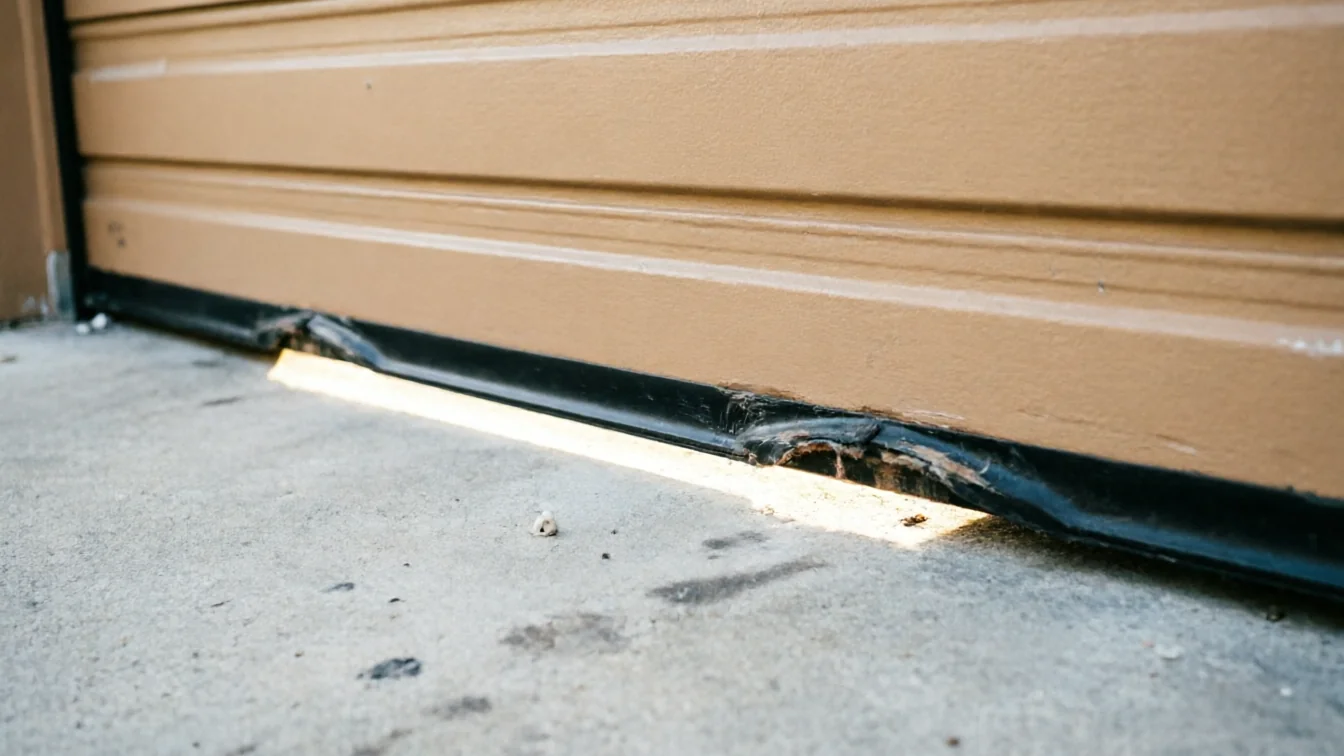
Most houses in this area went up between 1957 and 2007, with the bulk of the stock dating to the 1980s and '90s. Doors and tracks from that era were built to the codes and materials of their time, and the bottom seal - the rubber gasket that runs along the base of the door - was never meant to last the life of the house. Over twenty or thirty winters it hardens, shrinks, and pulls away from the slab, especially where the driveway has settled or cracked a little, which is common on homes this age. What you feel as a draft along the bottom of the door, or a thin line of daylight at the corner, is almost always that seal giving up, not something wrong with the door panel itself. On older torsion setups in this same housing window, the seal retainer track can also warp slightly, which lets the gasket twist instead of sitting flat against the floor.
What to Look At First
Start at the bottom seal. Press a finger along its length - if it's stiff, cracked, or flattened on one side, that's your draft source, and it's a cheap, fast fix compared to anything involving springs or the opener. Next, look at the weatherstripping along the two side jambs and the top header; on houses from the 1980s and '90s this is often the original vinyl, and vinyl that old is usually brittle rather than soft. Run your hand along it on a cold morning and you'll feel where the cold is actually getting through. Check the slab itself too - concrete from this period has had decades to settle, and even a quarter-inch gap under one corner of the door is enough to let in a steady draft no seal can fully stop. If the door hasn't been adjusted in years, the bottom bracket may also have sagged slightly, throwing the seal off level.
How Local Conditions Play In
This is a cold-severe climate, and that matters more for seals than for almost anything else on the door. Rubber and vinyl don't fail gradually in weather like this - they go brittle fast once temperatures swing hard, and a seal that looked fine in October can crack the first week it hits single digits. Repeated freeze-thaw cycles also work on the slab edge under the door, widening the same small gaps that let drafts through, so a seal that fit snug when it was installed can end up riding over an uneven lip of concrete a few winters later. If your garage shares a wall with living space, as many homes in this area do, a bad seal isn't just a cold floor problem - it's pulling heat out of a room on the other side of that wall all winter long.
When Waiting Is Fine
Not every draft needs a same-week call. If the seal is only worn in one short section and the rest of the door closes tight, a slightly weaker seal there won't hurt anything structural - it's a comfort and energy issue, not a safety one, and you can get through the rest of the season and handle it when it's convenient. The same goes for a thin gap at one corner from a settled slab: unless it's letting in enough cold to freeze pipes or make the space unusable, it's reasonable to wait and bundle the fix with other garage work. Where we'd push you to act sooner is if the seal has pulled away enough that you can see daylight along most of the bottom edge, or if the draft is bad enough that you're running a space heater in the garage to compensate - at that point the seal is gone, not just worn, and it's cheap enough to not put off.
Frequently asked questions
Why is my garage door suddenly drafty when it wasn't last winter?
Rubber and vinyl seals don't wear evenly - they're fine for years and then go brittle fast once a cold snap hits, which is common in this climate. If your house is from the 1980s or '90s, like most in this area, the seal is likely original or close to it and simply reached the end of its life this season.
Is a drafty garage door a sign something bigger is wrong?
Usually not. In homes built in this area's typical 1957-2007 window, a draft is almost always the bottom seal, side weatherstripping, or a settled slab edge - not the springs, opener, or panels. Those are separate systems and a seal problem rarely signals trouble with them.
Can I just replace the seal myself?
The bottom seal is a straightforward swap on most doors from this era, and plenty of owners do it themselves. Where it gets harder is if the retainer track is warped or the slab has settled unevenly, since then the new seal won't sit flat either - that's worth having looked at in person.
Related garage door services in Coon Rapids
More garage door guides
Book garage door service in Coon Rapids
Call now or request a quote - tell us what the door is doing and where you are.