
Coon Rapids, MN · Garage Door Service
What Actually Happens During a Service Call Here
A straight look at what a Coon Rapids garage door service call includes, built around this city's 1957-2007 housing stock and severe cold winters, not generic advice.
- Repairs & new doors
- Springs & openers
- Serving 7 nearby communities
What Is Going On
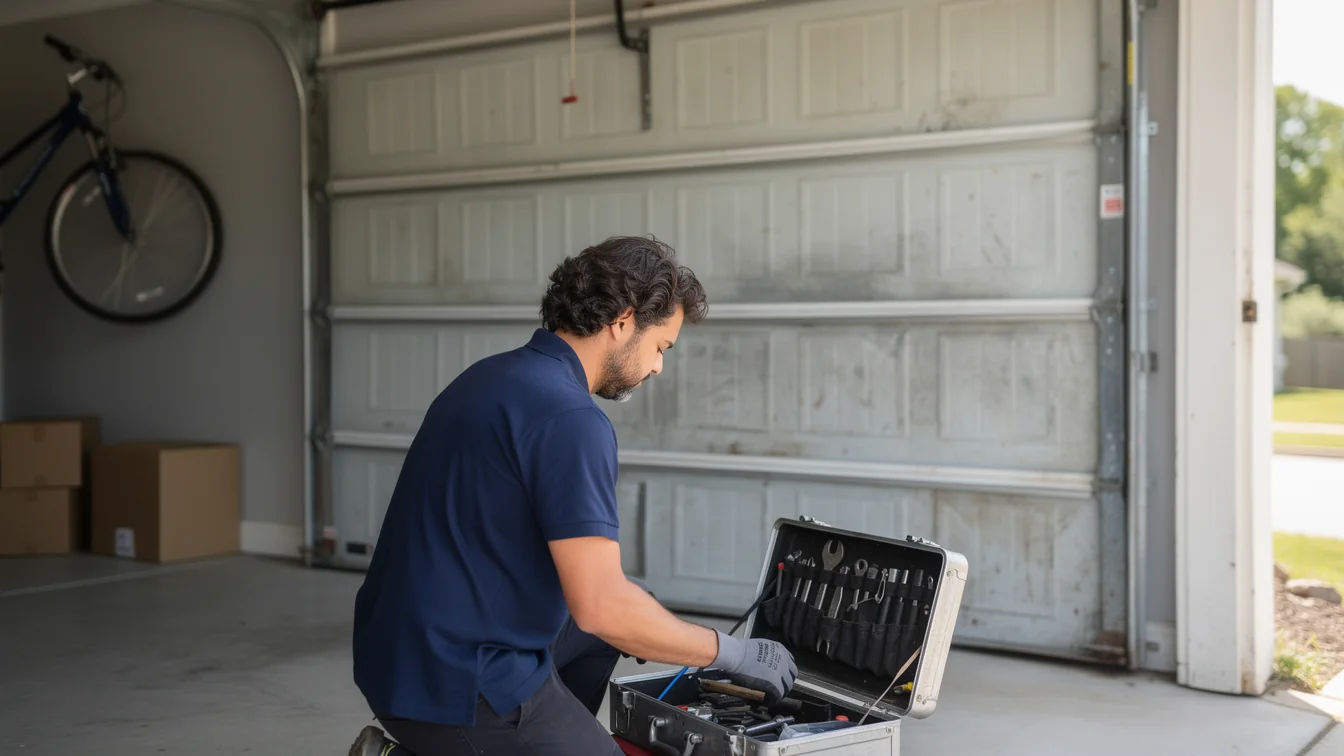
When you call us out, the job starts with figuring out what's actually failing, not just what's making noise. In a city where most houses went up between 1957 and 2007 (median build year 1982), we see a pretty narrow band of door and opener generations, which actually makes diagnosis faster than in a mixed-era town. A service call means we open the panel, check the spring wind and cable condition, run the door through a full cycle by hand with the opener disconnected, and look at the track alignment before we touch anything electrical. Most of what breaks on a door this age is mechanical wear, not the opener logic board, even though the opener is what homeowners usually blame first. We'll tell you flat out if the noise is a bearing going bad in the opener motor or a roller that's seized in the track, because those are two different repairs with two different price points. The call includes a written explanation of what we found and what it costs to fix, before we start work. We don't charge you to find out what's wrong and then walk away if you want a second opinion.
What to Look At First
Given the 1980s-90s stock that makes up most of the 48 named areas we work in, the first things worth checking are the torsion spring cycle count and the weatherstripping at the bottom panel. A door installed in that era has usually had one spring replacement already, maybe two, and if nobody's logged it, the spring is probably original to the second install, not the house. Second, check the opener's force settings. Openers from that stretch of building years were often set once at install and never touched again, which means a door that's gotten heavier with age (sagging panel, dirty track) is being forced through its cycle instead of adjusted. We check that force setting on every call whether or not it's why you called us. Third, look at the bottom seal. On an older slab door, a cracked seal lets in more than just drafts here. We're not going to tell you to replace parts that are fine. If the track is clean and the spring is balanced, we say so and charge you for the call, not for parts you don't need.
How Local Conditions Play In
This area sits in a severe cold climate band, and that changes what a service call actually tests for. Cold doesn't just make steel stiffer, it changes how grease behaves in the rollers and how much the door weighs when a torsion spring has to lift it from a dead stop at 10 below. A spring that's been fine all summer can snap in January because the metal has less give and the opener is pulling harder against stiffer hardware. So on a winter call here, we check spring tension differently than we would in June, and we look harder at the bottom panel seal and the weather seal track, because a gap that's a non-issue in July turns into ice buildup and a door that won't seat right by February. We also check the opener's cold-weather behavior specifically, since force settings calibrated in summer often need a second look once temperatures drop. This is routine for us given the climate here, not an upsell.
When Waiting Is Fine
Not everything needs a same-week call. If your door is making a new noise but still opens and closes smoothly, closes flush, and the opener isn't straining, you can usually wait and watch it for a week or two before booking anything. A squeak that shows up only in cold snaps and goes away once it warms up is often just stiff grease, not a failing part, and a shot of the right lubricant on the rollers and hinges can buy you real time. Where we draw the line: if the door is off-balance (it won't hold position halfway open when disconnected from the opener), or a cable looks frayed, stop using it and call. Those aren't wait-and-see situations, because a spring or cable failure under tension can hurt someone. One honest limit on our end: we don't stock every opener logic board model, especially older ones, so if your opener's control board is the failure point rather than the motor, that part can take longer to get than the spring or cable work does.
Frequently asked questions
Will you charge me just to tell me what's wrong?
Yes, the service call itself has a cost, but it includes a full diagnosis and a written estimate before any repair starts. If it turns out to be a five-minute fix, you still pay for the call, not for parts or labor you didn't need.
Why does my door act up specifically in winter?
This area sits in a severe cold climate band, and cold steel and stiff grease change how much load a spring and opener handle at startup. A door that was fine in summer can bind or the spring can fail once temperatures drop hard.
Is my opener original to the house?
Most houses in this service area were built between 1957 and 2007, median around 1982, so unless records show a replacement, there's a good chance your opener or door has already been swapped out once. We check the hardware age during the call rather than assume.
Do you always recommend opener force adjustments?
We check force settings on every call because doors from the common building era here often have settings that were never revisited. We only adjust it if it's actually off, not as a standard add-on.
Related garage door services in Coon Rapids
More garage door guides
Book garage door service in Coon Rapids
Call now or request a quote - tell us what the door is doing and where you are.